
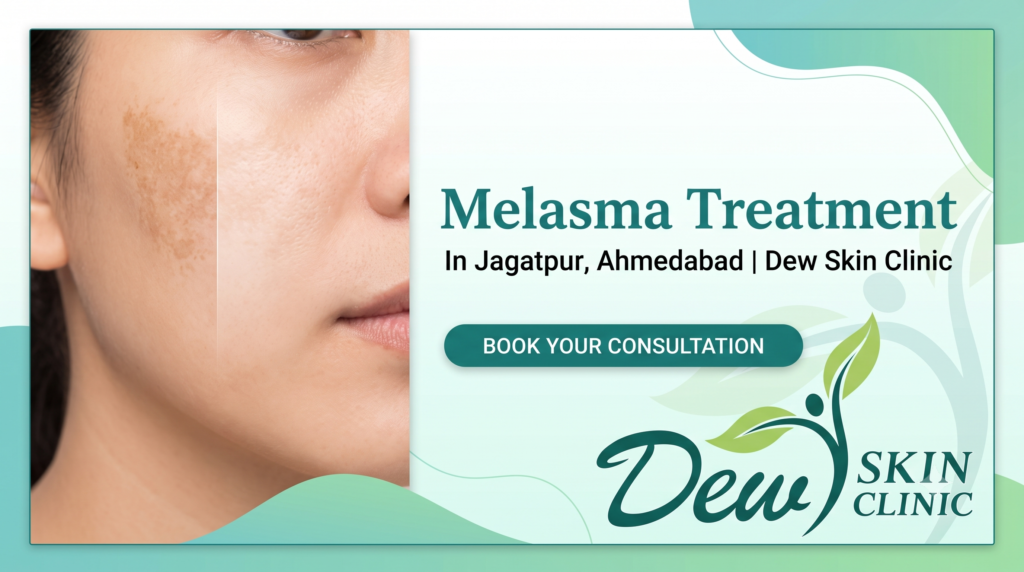
Brown or grey-brown patches on your cheeks, forehead or upper lip can quietly wear down your confidence. Foundation only hides them for a few hours. Fairness creams and home remedies often make the patches darker. If you are looking for reliable melasma treatment in Jagatpur, Ahmedabad, the right approach begins with a proper diagnosis and a plan built around your skin, your triggers and your lifestyle.
At Dew Skin Clinic, we treat melasma as a long-term skin condition to be controlled, not a blemish to be wiped away in one visit. This guide covers what melasma is, why it appears, how it differs from other pigmentation, which treatments work, and how to keep your results once your skin clears.
What Is Melasma? Understanding This Common Pigmentation Problem
Melasma is a common skin condition. It causes symmetrical brown, tan or grey-brown patches, mostly on the cheeks, forehead, bridge of the nose, upper lip and jawline. It is far more common in women, though men can develop it too. It appears most often in medium to deep skin tones, so it is very common among people in Gujarat.
Melasma is not painful, contagious or cancerous, but it can be stubborn and emotionally draining. It tends to flare in summer, fade slightly in winter, and return whenever triggers are not controlled. Our pigmentation and melasma treatment page gives an overview of how we approach these cases.
Types of Melasma: Epidermal, Dermal and Mixed
Dermatologists often group melasma by how deep the pigment sits, because depth affects both the treatment choice and the expected response.
- Epidermal melasma: Pigment sits in the top layer of skin. Patches look light to dark brown with clear edges, and they usually respond faster to treatment.
- Dermal melasma: Pigment lies deeper. Patches look greyish or bluish-brown with blurry edges, and they take longer and are harder to clear.
- Mixed melasma: A combination of both, and the most common type in practice. It usually improves in stages, with the surface pigment lightening before the deeper pigment.
Knowing your type helps set realistic expectations. That is why a careful examination matters before any procedure begins.
What Causes Melasma? Common Triggers in Indian Skin
Melasma happens when pigment-producing cells (melanocytes) become overactive and make excess melanin. Several triggers can set this off, and most people have more than one.
- Sun and UV exposure: Ahmedabad’s strong sunshine is the biggest trigger. Even a short commute without protection can worsen the patches.
- Visible light and heat: Heat from kitchens, hot air from two-wheelers and bright indoor lighting can play a role, which is why sunscreen alone is sometimes not enough.
- Hormonal changes: Pregnancy, birth control pills, hormone therapy and thyroid problems are well-known contributors.
- Genetics: If your mother or sister has melasma, you are more likely to develop it.
- Skin irritation: Harsh scrubs, waxing on the face, unsupervised peels and steroid-containing creams can trigger new pigment.
- Certain medicines: Some drugs increase sun sensitivity, so always tell your doctor about your medication history.
Treating the patches without controlling the triggers almost always leads to relapse, so a good plan addresses both.
Melasma vs Other Dark Spots: Why the Right Diagnosis Matters
Not every dark patch is melasma. Using the wrong treatment on the wrong condition wastes time and can worsen the problem.
| Condition | Typical look | Usual cause |
|---|---|---|
| Melasma | Symmetrical, blotchy patches on cheeks, forehead, upper lip | Hormones, sun, genetics |
| Post-acne marks | Flat dark spots where pimples healed | Inflammation after acne |
| Sun spots (lentigines) | Small, well-defined brown spots on exposed skin | Long-term sun damage |
| Freckles | Tiny light-brown dots, often since childhood | Genetics, sun |
| Dull, uneven tone | Overall tired or patchy complexion | Sun, pollution, poor skin care |
If your concern is closer to post-acne marks, our acne and pimple treatment in Jagatpur, Ahmedabad guide and acne scar treatment near Gota and Jagatpur page will be more relevant. For a general tired complexion, see our dull and uneven skin tone treatment.
Common Myths and Mistakes That Make Melasma Worse
Many patients arrive after months of trying things on their own. These are the most common mistakes we see.
- “A strong bleaching cream will clear it quickly.” Unregulated creams can thin the skin, cause redness and trigger rebound darkening once stopped.
- “Lemon, potato or turmeric will fade it naturally.” These can irritate the skin and often worsen pigmentation.
- “Melasma is caused by dirty skin.” It is not. Over-scrubbing usually makes it worse.
- “Sunscreen is only for the beach.” For melasma, daily sun protection is the most important habit of all.
- “Once it clears, I can stop treatment.” Without maintenance and sun protection, melasma commonly returns.
How Dermatologists Diagnose Melasma
A good treatment plan starts with a thorough assessment. At our clinic, this usually includes:
- A detailed history covering pregnancies, medicines, thyroid status, family history and skincare habits.
- A close look at pattern, colour and edges of the patches.
- Magnified skin examination where needed, using dermoscopy, to judge pigment depth and rule out other conditions.
- Advice on any tests if a hormonal or medical cause is suspected.
This stage is what separates a personalised plan from a generic package.
Melasma Treatment Options at Dew Skin Clinic, Jagatpur
No single treatment suits everyone. Your dermatologist may combine several of the options below, in a carefully planned order, depending on the type and severity of your melasma.
Medical Skincare and Prescription Treatments
Most plans begin with prescribed topical treatments that reduce melanin production, calm inflammation and protect the skin barrier. This stage also includes a gentle cleansing routine and strict sun protection. In many mild cases, this alone brings a visible improvement.
Chemical Peels for Melasma
Mild, carefully chosen peels remove pigmented surface cells and improve skin tone. Melasma-prone skin is sensitive, so the peel type, strength and gap between sessions must be matched to you. Read more about our chemical peels treatment.
Laser Toning and Q-Switched Nd:YAG Laser
Laser toning uses low-energy laser pulses to break up excess pigment gradually without damaging surrounding skin. For melasma, gentle repeated sessions are generally preferred over aggressive ones. See how laser toning and carbon laser facial treatment works, or learn about the Q-Switched Nd:YAG laser used for stubborn pigment.
Medi-Facials and HydraFacial
Once the skin is stable, brightening facials can support your treatment by exfoliating, hydrating and improving glow. Options include our medi-facial treatment and HydraFacial treatment. These are supportive treatments and work best alongside a medical plan.
Microneedling and Skin Boosters
Microneedling stimulates renewal and can help the skin absorb brightening ingredients better. It is usually added later in the plan, once inflammation is under control. Explore our microneedling treatment and skin booster treatment options for tone, hydration and texture.
Exosome Therapy
For patients whose skin needs recovery support after procedures, exosome therapy is an option your doctor may discuss. It is used to support skin repair and overall quality.
Glutathione for Skin Brightness
Some patients choose glutathione as a supportive option for overall skin brightness. Your doctor will explain whether it suits you and what is realistic. Learn about glutathione IV treatment in general, or read about IV glutathione in Jagatpur, Ahmedabad before deciding. Glutathione is not a stand-alone cure for melasma and works best as part of a wider plan.
Which Treatment Is Right for You? A Quick Comparison
| Treatment | Best for | Downtime | Notes |
|---|---|---|---|
| Prescription skincare | All melasma types, first step | None | Needs consistency and sun protection |
| Chemical peels | Epidermal and mixed melasma | Mild flaking for a few days | Needs careful strength selection |
| Laser toning | Mixed and stubborn patches | Minimal | Multiple gentle sessions |
| Medi-facial / HydraFacial | Dullness, supportive care | None | Supports, but does not replace, medical treatment |
| Microneedling | Texture plus tone | Short redness | Added once skin is stable |
Your dermatologist will decide the exact combination after examining your skin.
What to Expect: Your Melasma Treatment Journey Step by Step
We follow a simple, doctor-led process:
- Consultation and skin analysis: We review your history, medicines, hormonal factors and daily sun exposure.
- Personalised plan: You receive a step-by-step plan with realistic timelines and clear explanations.
- Calming and preparing the skin: We start with gentle care and sun protection to build a stable base.
- In-clinic sessions: Peels, laser toning or other procedures are introduced at the right time and strength.
- Review and adjustment: Regular follow-ups let us change the plan as your skin responds.
- Maintenance: A simple long-term routine helps stop the patches from returning.
How Long Does Melasma Treatment Take?
Every case differs, but most plans run for a few months, followed by a maintenance phase. Epidermal melasma tends to respond faster. Dermal and mixed melasma take more patience, and the deeper pigment lightens last. Many people notice early improvement in skin tone within the first few weeks, but visible fading of stubborn patches usually takes longer.
Because melasma can return with sun exposure or hormonal changes, it is best to think of it as a condition you manage over time. We will never promise overnight clearing, and results vary from person to person.
Sun Protection and Home Care: The Secret to Lasting Results
Even the best melasma treatment in Jagatpur will not last without daily protection. Build these habits:
- Apply a broad-spectrum sunscreen (SPF 30 or higher) every morning, and reapply every two to three hours when outdoors.
- Choose a sunscreen that also protects against visible light. Tinted mineral sunscreens are often helpful.
- Wear a wide-brimmed hat, scarf or umbrella, especially on two-wheelers.
- Avoid waxing, harsh scrubs and unprescribed bleaching creams on the affected areas.
- Use only the products your dermatologist recommends, and avoid switching often.
- Stay away from prolonged heat exposure where possible, such as standing near a hot stove for long periods.
- Keep follow-up appointments, even when your skin looks better.
Melasma in Pregnancy, Men and Brides: Special Situations
During pregnancy: Melasma is common when hormones change. Many treatments are avoided during pregnancy and breastfeeding, so safe sun protection and doctor-approved care come first, with active treatment planned later.
In men: Men often delay seeking help, but the causes and treatments are similar. Sun protection is especially important for men who ride two-wheelers or work outdoors.
Before a wedding: If you want even, glowing skin for your big day, start early. Melasma needs time, and rushing it can backfire. Our bridal skin treatments can be planned around your date, ideally a few months ahead.
Precautions and Possible Side Effects
Treatments are generally well tolerated when planned by a specialist, but some effects can occur:
- Temporary redness, dryness or mild peeling
- Sensitivity to sunlight after procedures
- Rarely, darkening of the skin if the wrong treatment or strength is used, or if sun protection is neglected
This is exactly why treatment should be supervised by a qualified dermatologist. You should never experiment with strong peels or lasers on your own.
Why Choose Dew Skin Clinic for Melasma Treatment Near Jagatpur?
Patients from Jagatpur, Gota and surrounding areas choose us for a careful, science-first approach:
- Doctor-led diagnosis: Your treatment starts with examination, not a fixed package.
- A full range of options: From medical skincare and peels to laser toning and skin boosters.
- Honest timelines: We explain what is realistic before every procedure.
- Structured follow-ups: Regular reviews protect your results and reduce relapse.
You can learn about our dermatologist, Dr. Vishal H. Shroff, read about the Dew Skin Clinic team, and see patient testimonials before your visit. You can also browse our full list of dermatology services, or read more about our trusted dermatology clinic in Jagatpur.
If you live a little further out, we also offer melasma treatment in Chandkheda, Ahmedabad, melasma treatment in Motera, Ahmedabad, melasma treatment in Adalaj, Ahmedabad, and melasma treatment near Vaishno Devi Circle.
Frequently Asked Questions About Melasma Treatment in Jagatpur
Can melasma be cured permanently?
Melasma can be controlled and lightened very well, but it can return with sun exposure or hormonal shifts. Daily sun protection and maintenance keep it under control.
Is laser toning safe for melasma?
When done gently by a trained doctor on properly prepared skin, laser toning is commonly used for melasma. Aggressive settings or poor planning can worsen pigmentation, so professional supervision is essential.
How many sessions will I need?
This depends on the depth and spread of your pigmentation. Your dermatologist will give an estimate after examining your skin.
Does melasma go away after pregnancy?
In some women it fades on its own in the months after delivery, but in others it persists and needs treatment.
Can men get melasma?
Yes. It is less common in men, but the causes and treatment approach are similar.
Can I wear makeup during treatment?
In most cases yes, but use gentle, non-irritating products. Your doctor may advise you to skip makeup for a short time after certain procedures.
Will melasma come back after treatment?
It can, especially without sun protection. That is why maintenance is part of every good plan.
Can melasma be treated at the same time as acne?
Often yes, with a carefully planned routine. Your doctor will choose products that treat both without irritating your skin.
Is glutathione enough to treat melasma?
Glutathione may support skin brightness, but it is not a stand-alone treatment for melasma. A complete plan usually includes medical skincare, sun protection and, where suitable, in-clinic procedures.
When should I see a dermatologist?
See a doctor if patches are spreading, darkening, not responding to sunscreen and basic care, or if you are unsure whether they are melasma.
Book Your Melasma Consultation Today
You do not have to live with stubborn dark patches. With the right diagnosis, a personalised plan and steady sun protection, melasma becomes much easier to manage. Ready to begin your melasma treatment in Jagatpur, Ahmedabad? Book your appointment or contact Dew Skin Clinic today, and take the first step toward clearer, more even-toned skin. You can also check our FAQs for quick answers before your visit.
Disclaimer: This article is for general education and is not a substitute for medical advice. Results vary from person to person. Please consult a qualified dermatologist for a personalised diagnosis.