
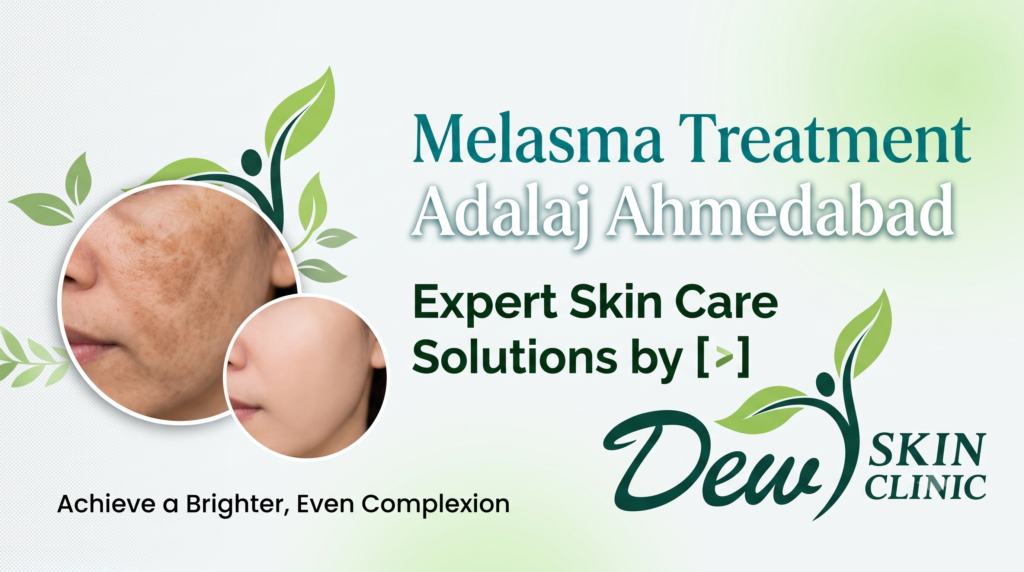
If you live near Adalaj and have noticed brownish or greyish patches spreading across your cheeks, forehead, nose, or upper lip, you are likely dealing with melasma, one of the most common and stubborn pigmentation disorders seen in Indian skin. At Dew Skin Clinic, patients from Adalaj, Gandhinagar highway, and surrounding societies regularly come in frustrated after months of trying creams and home remedies that barely made a dent. This guide walks through what melasma actually is, why it is so common in this region, and what a dermatologist-led melasma treatment in Adalaj Ahmedabad looks like from the first consultation to long-term maintenance.
Melasma is not a cosmetic inconvenience you simply have to live with. With the right diagnosis and a structured treatment plan, most patients see meaningful fading within a few months. What matters most is understanding why generic pigmentation creams fail and why a proper dermatologist for melasma near Adalaj is the safer, faster route to clearer skin.
What Is Melasma and Why Does It Affect So Many People in Adalaj
Melasma is a chronic skin condition where melanocytes, the pigment-producing cells in your skin, become overactive and produce excess melanin in specific areas. This shows up as symmetrical, blotchy brown or greyish-brown patches, most commonly on the:
- Cheeks and cheekbones
- Forehead and temples
- Bridge of the nose
- Upper lip (sometimes mistaken for a moustache shadow)
- Chin and jawline in more extensive cases
Adalaj sits in a belt of Ahmedabad that sees intense UV exposure for most of the year, and sun exposure is the single biggest trigger for melasma flare-ups. Add to that the area’s mix of working professionals who commute daily under direct sunlight, and a growing number of young women dealing with hormonal pigmentation triggered by pregnancy, PCOS, or oral contraceptives, and it becomes clear why melasma pigmentation treatment in Ahmedabad is in such high demand from this locality specifically.
Common Triggers Behind Melasma in This Region
- Sun exposure without adequate protection: UV rays stimulate melanocytes directly and worsen existing patches within days.
- Hormonal changes: Pregnancy melasma, often called the “mask of pregnancy,” and pigmentation linked to birth control pills are extremely common presentations.
- Genetic predisposition: Melasma tends to run in families, particularly among those with medium to darker skin tones, which describes most patients we see from Adalaj.
- Heat and visible light exposure: Beyond UV rays, kitchen heat and prolonged screen exposure can also aggravate pigment-producing cells.
- Certain skincare products: Harsh scrubs, unregulated fairness creams, and inconsistent sunscreen use often make existing pigmentation worse rather than better.
Why Melasma Does Not Respond to Regular Fairness Creams
This is the question we hear most often from patients who visit us for melasma treatment in Adalaj Ahmedabad after months of self-treatment: “I have used every cream available, why is nothing working?”
The honest answer is that melasma is a deeper, more complex pigmentation disorder than surface-level tanning or sunspots. Over-the-counter creams typically only lighten the very top layer of skin. Melasma pigment often sits in both the epidermis and dermis, meaning topical products alone cannot reach it effectively. Worse, many unregulated fairness creams contain steroids or high-dose hydroquinone that can trigger a condition called ochronosis, a form of permanent darkening, when used long-term without supervision.
This is exactly why a structured, dermatologist-supervised approach matters. A proper treatment plan combines the right topical actives at the right strength with in-clinic procedures that target pigment at multiple skin depths simultaneously.
How Dew Skin Clinic Diagnoses Melasma Before Treatment
Every patient who visits Dew Skin Clinic for pigmentation and melasma-related concerns goes through a structured diagnostic process before any treatment is recommended. This step is often skipped by generic beauty clinics, which is one reason patients see inconsistent results elsewhere.
- Dermoscopy examination: A handheld magnification tool is used to assess how deep the pigment sits, which determines whether the melasma is epidermal, dermal, or mixed type.
- Detailed history taking: Our dermatologists ask about hormonal history, sun exposure patterns, current medications, and past treatments attempted, since this shapes the entire treatment roadmap.
- Melasma Area and Severity Index (MASI) scoring: This gives us a measurable baseline so progress can be tracked objectively at each follow-up visit rather than relying on guesswork.
- Trigger identification: We flag lifestyle and product-related triggers specific to the patient so that treatment gains are not undone by daily habits.
This diagnostic-first approach is central to how we approach pigmentation and melasma treatment across all our clinic programs, not just for patients coming in from Adalaj.
Melasma Treatment Options Available at Dew Skin Clinic
Once the type and severity of melasma is established, treatment is usually built as a combination approach rather than a single procedure, since melasma responds best to layered intervention.
1. Medical-Grade Topical Therapy
Prescription-strength topical regimens are the foundation of almost every melasma treatment plan. These may include tyrosinase-inhibiting agents, retinoids, and other depigmenting actives formulated at concentrations and combinations that are simply not available over the counter. Unlike random drugstore creams, these are calibrated to the patient’s skin type and melasma depth, and adjusted at every follow-up based on response.
2. Chemical Peels for Melasma
Superficial and medium-depth chemical peels help exfoliate pigmented skin cells and encourage even-toned regeneration underneath. For patients dealing with stubborn epidermal melasma, a customized peel series often delivers visible improvement within four to six sessions. Peels also help reduce the appearance of associated texture issues and open pores, which many melasma patients also mention as a secondary concern. You can read more about how these sessions are structured on our chemical peels treatment page.
3. Laser Toning and Carbon Laser Facials
For deeper or more resistant pigment, low-fluence laser toning sessions break down melanin deposits without damaging surrounding tissue. This is typically reserved for patients whose dermoscopy shows dermal or mixed-type melasma, since epidermal-only cases usually respond well to peels and topicals alone. Our laser toning and carbon laser facial treatment protocols are calibrated specifically for melasma-prone Indian skin to minimize the risk of post-inflammatory darkening, a real concern with generic laser settings.
4. Oral and Adjuvant Therapy
In select cases, particularly where pigmentation is widespread or hormonally driven, dermatologists may recommend oral tranexamic acid or other adjuvant therapy alongside topical and procedural treatment. This is always a clinical decision made after reviewing the patient’s full medical history, never a default add-on.
5. Medi-Facials and Skin Boosters for Maintenance
Once active pigmentation has visibly reduced, maintenance sessions help preserve results and improve overall skin resilience. Many patients continue with periodic medi-facial treatment or skin booster treatment sessions to keep skin hydrated and less reactive, since dehydrated, compromised skin barriers tend to relapse into pigmentation faster.
6. IV Glutathione as a Supportive Option
Some patients ask about intravenous options for overall skin brightening alongside targeted melasma treatment. While IV glutathione is not a standalone melasma cure, it is sometimes used as a supportive therapy for patients seeking broader skin tone improvement. You can learn more on our IV glutathione treatment page, and our IV glutathione in Adalaj Ahmedabad page covers how this is offered specifically for patients in this locality.
What to Expect During Your First Melasma Consultation
Patients visiting us for the first time for melasma treatment in Adalaj Ahmedabad often want to know exactly what the appointment involves. Here is a realistic walkthrough:
- Initial assessment: Skin type, tone, and pigmentation pattern are examined under proper clinical lighting and dermoscopy.
- History discussion: Hormonal factors, sun exposure habits, previous treatments, and any allergies are reviewed.
- MASI scoring and photography: Baseline photos and scoring are taken with the patient’s consent to track progress objectively over time.
- Personalized plan: A treatment roadmap is discussed, including expected timelines, session frequency, and realistic outcome expectations. No two melasma cases are treated identically.
- Sun protection counselling: Since melasma flares dramatically with UV exposure, proper sunscreen selection and reapplication habits are covered in detail, as this single step can make or break treatment success.
Realistic Timeline: How Long Does Melasma Treatment Take
One of the most important things we tell every patient upfront is that melasma is a manageable condition, not one with an instant fix. Setting the right expectations from day one avoids frustration and premature discontinuation of treatment.
- 4 to 6 weeks: Early improvement in surface tone and texture with consistent topical therapy.
- 8 to 12 weeks: Noticeable fading of patches, particularly with combined peel or laser toning sessions layered in.
- 3 to 6 months: Significant reduction in pigment intensity for most patients, though deeper dermal melasma may take longer.
- Ongoing maintenance: Since melasma has a tendency to relapse, especially with sun exposure or hormonal shifts, most patients continue periodic maintenance sessions and strict sunscreen discipline well beyond the active treatment phase.
Why Sun Protection Is Non-Negotiable for Melasma Patients
No melasma treatment, however advanced, will hold up against unprotected sun exposure. Adalaj’s climate means UV index levels stay high for the majority of the year, so this is not a seasonal precaution but a daily one. Our dermatologists typically recommend:
- Broad-spectrum SPF 50 sunscreen with both UVA and UVB protection, reapplied every three to four hours when outdoors
- Physical barriers like wide-brimmed hats or dupattas during peak sun hours
- Avoiding direct sun exposure between 11 am and 4 pm wherever possible
- Being cautious with heat exposure from cooking or hot yoga, since visible light and heat can also aggravate melanocyte activity
Patients who pair professional melasma pigmentation treatment in Ahmedabad with disciplined sun protection consistently see faster, longer-lasting results than those who treat sun protection as optional.
Melasma vs Other Pigmentation Conditions: How to Tell the Difference
Patients often confuse melasma with other forms of facial pigmentation, which is why self-diagnosis and generic over-the-counter treatment so often backfires. A few key differences:
- Melasma appears as symmetrical, blotchy patches, usually on both sides of the face, and worsens with sun and hormonal triggers.
- Post-inflammatory hyperpigmentation develops after acne, injury, or inflammation and tends to follow the exact shape of the original lesion.
- Freckles and sunspots are typically smaller, more defined spots rather than diffuse patches, and respond differently to treatment.
- Dull, uneven skin tone without distinct patches may point to a broader tone concern rather than true melasma, which our dull and uneven skin tone treatment page addresses separately.
Because treatment approaches differ significantly between these conditions, an accurate dermatoscopic diagnosis before starting any procedure is essential rather than optional.
Why Choose Dew Skin Clinic for Melasma Treatment Near Adalaj
Patients from Adalaj choosing where to get melasma treatment usually weigh a few factors: how experienced the dermatologist is with pigmentation specifically, whether the clinic uses a diagnostic-first approach, and whether treatment plans are personalized rather than one-size-fits-all. At Dew Skin Clinic, every melasma case is handled under the supervision of our lead dermatologist, and treatment plans are adjusted at every follow-up based on measured progress rather than assumptions.
You can read more about our clinical approach and team credentials on our about us page, or learn more directly about Dr. Vishal H. Shroff, who leads pigmentation and melasma cases at the clinic. Patients who have completed their melasma journey with us have shared their experience on our patient testimonials page.
If you are also dealing with related concerns such as acne scars, fine lines, or overall skin texture alongside pigmentation, our acne scars and wrinkles and aging skin pages outline how those are addressed, often within the same overall skin health plan.
For patients in the Adalaj locality specifically, we also offer targeted programs for related concerns, including acne and pimple treatment in Adalaj, anti-aging skin treatment in Adalaj, cryotherapy treatment in Adalaj, hair loss treatment in Adalaj, and acne scar treatment in Adalaj, since many patients dealing with pigmentation are also managing one or more of these concerns simultaneously.
Frequently Asked Questions About Melasma Treatment in Adalaj Ahmedabad
Is melasma treatment permanent? Melasma is a chronic, recurring condition rather than one that is cured once and never returns. Treatment can significantly reduce or clear existing pigment, but ongoing sun protection and periodic maintenance are usually needed to prevent relapse, particularly for patients with a genetic or hormonal predisposition.
Can melasma go away on its own after pregnancy? In some cases, pregnancy-related melasma fades naturally within a few months after delivery as hormone levels stabilize. However, many patients find that some pigmentation persists and requires professional treatment to fully clear, especially if sun exposure continued during and after pregnancy.
Are chemical peels safe for melasma-prone skin? Yes, when performed by a qualified dermatologist using peels appropriate for the patient’s skin type and melasma depth. Incorrect peel strength or frequency, especially when done at unregulated salons, can actually worsen pigmentation, which is why professional supervision matters.
How many sessions are typically needed to see visible improvement? Most patients begin noticing visible fading within four to six sessions of combined treatment, though total sessions required depend on melasma depth, severity, and how consistently sun protection is followed between visits.
Does melasma treatment hurt? Most in-clinic procedures used for melasma, including chemical peels and laser toning, cause only mild, temporary sensations such as warmth or tingling. Topical numbing is used where needed, and any redness typically settles within a few hours to a day.
Can men get melasma too? Yes, though it is more commonly diagnosed in women due to hormonal triggers. Men with significant sun exposure or a genetic predisposition can and do develop melasma, and the diagnostic and treatment approach remains largely the same.
Booking Your Melasma Consultation
If pigmentation on your face has been affecting your confidence and creams alone have not helped, the next step is a proper dermatological evaluation rather than another round of guesswork. You can book an appointment directly with our team, or visit our contact us page for clinic location and timing details. For general queries about procedures and aftercare, our FAQs page also covers commonly asked questions across all our dermatology services.
Melasma treatment works best when it starts early and follows a structured plan. If you are searching for reliable, dermatologist-led melasma treatment in Adalaj Ahmedabad, Dew Skin Clinic is positioned to guide you through diagnosis, active treatment, and long-term maintenance under one roof.