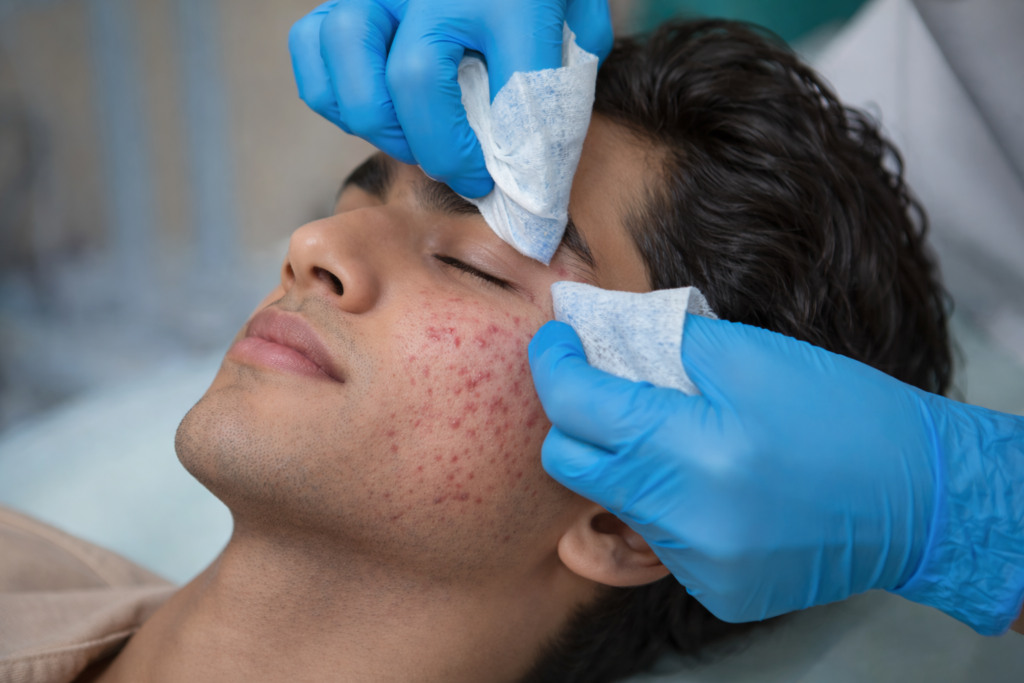
Can acne scars be completely removed?
While many treatments can significantly reduce the appearance of acne scars, complete removal depends on the scar type and depth. Superficial scars and pigmentation marks respond very well to treatment. Deeper structural scars can be greatly improved but may not be entirely eliminated. Our dermatologists at Dew Skin Clinic set realistic expectations and use the most effective combination of treatments to achieve the best possible outcome for each patient.
How many sessions are needed for acne scar treatment?
The number of sessions varies based on scar type and treatment chosen. Chemical peels typically require 4 to 8 sessions. MNRF treatments work best with 4 to 6 sessions. CO2 laser may require 2 to 4 sessions. Most patients begin to notice visible improvement after 2 to 3 sessions.
What is the gap between treatment sessions?
Sessions are typically spaced 4 to 6 weeks apart to allow adequate healing time between treatments. Your dermatologist will specify the appropriate interval for your chosen procedure.
Is acne scar treatment safe for Indian skin types?
Yes. Indian skin types can be treated effectively with acne scar treatments. However, certain laser settings need to be carefully calibrated for darker skin tones to avoid post-inflammatory hyperpigmentation. At Dew Skin Clinic, our dermatologists have extensive experience treating Indian skin types and choose the safest, most appropriate settings for each patient.
Can I combine multiple acne scar treatments?
Yes, combining treatments often produces better results than using a single modality. For example, MNRF combined with PRP, or CO2 laser followed by chemical peels, can address multiple aspects of scarring simultaneously. Your dermatologist will design the ideal combination protocol for your skin.
How soon will I see results from acne scar treatment?
Initial improvements may be visible after the first few sessions, but significant results typically appear after 3 to 6 months as new collagen production matures. Patience and completing the full recommended course of treatment are key to achieving the best outcome.
Can I wear makeup after acne scar treatment?
For most procedures, makeup should be avoided for at least 24 hours post-treatment to allow the skin to heal without exposure to chemicals or bacteria. Your dermatologist will advise you on when it is safe to resume normal skincare and makeup routines.
How do I prevent acne scars from forming again?
Treating active acne promptly with dermatologist-prescribed medications, avoiding picking or squeezing pimples, wearing broad-spectrum SPF 50 sunscreen daily, maintaining a regular skincare routine, and following up with your dermatologist regularly are the most effective ways to prevent new scars from forming. Explore our acne pimple treatment and open pores treatment pages for related guidance.
Do acne scars worsen with sun exposure?
Yes. Sun exposure after acne scarring significantly worsens post-inflammatory pigmentation and can darken existing marks. Daily use of broad-spectrum sunscreen with at least SPF 50 is essential, especially during and after any acne scar treatment course. This is emphasized as a critical part of aftercare at Dew Skin Clinic.
Is there any home care I should follow between sessions?
Between sessions, your dermatologist may prescribe specific serums, moisturizers, and prescription topical creams to support healing and enhance results. Avoiding harsh exfoliants, picking at healing skin, and minimizing sun exposure are essential between sessions.
What is the difference between MNRF and CO2 laser for acne scars?
MNRF is a non-ablative treatment that uses radiofrequency energy delivered via microneedles without significantly damaging the outer skin surface, resulting in minimal downtime of 1 to 2 days. CO2 laser is an ablative treatment that removes the outer skin layers to trigger deeper collagen remodelling, resulting in more dramatic results but with a longer recovery of 3 to 7 days. The best choice depends on your scar depth, skin type, and how much downtime you can accommodate.
Can acne scar treatment be done alongside treatment for pigmentation or open pores?
Yes. Many patients combine acne scar treatment with treatments for pigmentation, open pores, and overall skin texture improvement. Our dermatologists design comprehensive treatment plans that address multiple concerns simultaneously. Visit our skin texture scars treatment page and open pores treatment page for related information.
Are results permanent?
The structural improvements in scar tissue are long-lasting and in most cases permanent. However, pigmentation-related improvements require ongoing sun protection and maintenance to remain stable. New acne breakouts that are not treated promptly can create new scars over time.
Is acne scar treatment available for back and chest scars as well?
Yes. Acne scars on the back, chest, and shoulders can also be treated effectively with laser and other procedures. Treatment coverage and costs vary for body areas compared to facial treatment. Your dermatologist will advise accordingly during your consultation.
What should I avoid before my acne scar treatment session?
Before your session, avoid direct sun exposure for at least 1 to 2 weeks, discontinue retinoid-based products for 1 week, avoid waxing or chemical hair removal on the treatment area for 2 weeks, and inform your dermatologist about any active skin conditions, medications, or supplements you are taking.