
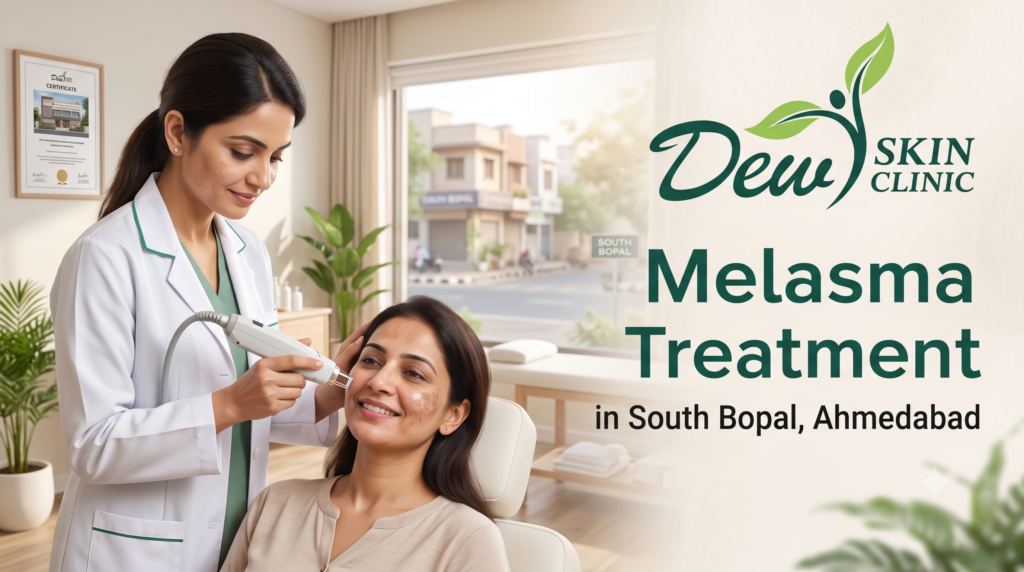
If grey-brown patches on your cheeks, forehead or upper lip keep returning no matter which cream you try, you are not alone. Melasma is one of the most common pigmentation concerns in Gujarat, and one of the most frustrating. People searching for melasma treatment in South Bopal, Ahmedabad have usually tried home remedies or over-the-counter fairness creams already, and now want a doctor-led plan that respects Indian skin.
This guide explains what melasma is, why it flares in Ahmedabad’s strong sunshine, which clinical treatments are used, what the journey looks like and how to protect your results. It is written for patients from Bopal, Ghuma, Shela, Shilaj and nearby neighbourhoods. At Dew Skin Clinic, our pigmentation and melasma treatment plans begin with a proper consultation with Dr. Vishal H Shroff. When you are ready for a personal assessment, you can book an appointment in a few minutes.
What Is Melasma? Understanding the Condition Behind Stubborn Dark Patches
Melasma is a common, harmless skin condition in which melanin-producing cells (melanocytes) become overactive and deposit extra pigment in the skin. It appears as symmetrical tan, brown or grey-brown patches, most often on the cheeks, nose bridge, forehead, upper lip and chin. It is far more common in women, but men can develop it too.
Melasma is not dangerous, and it is not contagious. The difficulty is that it is a chronic, relapsing condition. Pigment cells in melasma-prone skin stay sensitive, so patches can return when triggers such as sun, heat or hormones come back. That is why a one-time “pigmentation removal” session rarely delivers lasting results, and why professional melasma treatment in Ahmedabad focuses on both fading the patches and controlling the triggers.
Types of Melasma
Dermatologists usually describe melasma by the depth of the pigment:
- Epidermal melasma: pigment sits in the upper layer of skin. Patches look brown with clear edges and usually respond best to treatment.
- Dermal melasma: pigment sits deeper. Patches look grey-blue, have blurred borders and fade more slowly.
- Mixed melasma: a combination of both, and the most common pattern seen in clinic.
Identifying your type matters because it shapes the treatment plan, the number of sessions and the results you can realistically expect.
Why Melasma Is So Common in Ahmedabad and South Bopal
Several local factors make melasma especially common for anyone looking for pigmentation treatment in Ahmedabad.
Intense UV exposure. Ahmedabad has long, hot, sunny months, and ultraviolet light is the single biggest trigger for melasma. Even short, repeated exposure during a commute along SP Ring Road or a quick market run can darken existing patches.
Visible light and heat. Studies suggest that visible light and heat, not only UV rays, can stimulate pigment cells in darker skin tones. Cooking near a hot stove, riding a two-wheeler in summer and sitting near sunny windows can all contribute.
Hormonal changes. Pregnancy, birth control pills, thyroid imbalance and menopause are well-known triggers. Many women first notice melasma during or after pregnancy.
Genetics and skin type. Indian skin (Fitzpatrick types III to V) has more active melanocytes, so it is naturally more prone to melasma and to post-treatment darkening if the wrong procedure is used.
Skin irritation. Harsh scrubs, unsupervised steroid or bleaching creams, aggressive waxing and unsafe parlour treatments can inflame the skin and worsen pigmentation. If this sounds familiar, you may also be dealing with dull, uneven skin tone alongside melasma, and both can be treated in the same plan.
Symptoms of Melasma and How a Dermatologist Diagnoses It
The signs are usually easy to spot:
- Flat brown, tan or grey-brown patches with no pain, itching or scaling
- Symmetrical patches on both cheeks, or across the forehead, nose and upper lip
- Patches that darken in summer or after sun exposure and lighten slightly in winter
- Darkening that begins during pregnancy or after starting hormonal medication
Because other conditions, such as post-inflammatory hyperpigmentation, sun spots, Hori’s naevus or drug-induced pigmentation, can look similar, a self-diagnosis is risky. At the clinic, a dermatologist reviews your medical history, medications, hormonal factors and previous treatments. A close skin examination with dermoscopy helps judge how deep the pigment sits and how active it is. That assessment tells the doctor whether you need a gentle approach, a combination of procedures or a medical workup first.
Melasma vs Other Types of Pigmentation: Why the Difference Matters
Many people lump every dark mark under “pigmentation,” but the treatment differs. Post-acne marks fade as inflamed skin heals, sun spots are small and scattered, and under-eye darkening often has structural causes. You can read about dark circles treatment separately. Melasma, by contrast, is symmetrical, patchy and hormone- and light-sensitive. Treating melasma like simple tanning, for example with repeated bleaching or aggressive facials, often leaves it darker. A correct diagnosis is the first step toward the right melasma treatment in Ahmedabad, and it saves months of trial and error.
Melasma Treatment Options Available in South Bopal, Ahmedabad
There is no single “best” melasma treatment for everyone. The most effective plans combine several approaches, chosen for your skin type, melasma depth and lifestyle. Here are the main options a dermatologist may consider.
1. Sun Protection and Prescription Topicals
This is the foundation of every melasma plan. A broad-spectrum sunscreen with high SPF, preferably a tinted or iron-oxide-based formula that also blocks visible light, must be used every morning and reapplied through the day. Without it, no procedure will hold.
On top of that, doctors may prescribe depigmenting agents such as hydroquinone, azelaic acid, kojic acid, tretinoin, niacinamide or combination creams. These work by slowing pigment production and speeding up cell turnover. They should be used only under medical supervision because misuse can cause irritation, rebound darkening or skin thinning.
2. Chemical Peels for Melasma
Superficial peels using ingredients such as glycolic acid, lactic acid, salicylic acid or mandelic acid exfoliate the top layer of skin and help pigment fade gradually. Indian expert groups consider peeling an acceptable option for melasma when the peel type and strength are matched carefully to the patient. You can read more about our chemical peels treatment and how sessions are planned. Peels are usually repeated at intervals of a few weeks and work best alongside strict sun protection.
3. Laser Toning (Q-Switched Nd:YAG)
Low-fluence laser toning delivers gentle, repeated pulses of energy that break pigment into smaller particles the body can clear. It is popular for melasma because it involves little downtime and can be adjusted for darker skin. Settings must be conservative, because aggressive lasers can trigger rebound pigmentation in melasma. Learn more about laser toning and carbon laser facial treatment and our Q-switched Nd:YAG laser technology.
4. Microneedling and Mesotherapy
Microneedling creates tiny, controlled channels in the skin, which stimulates renewal and allows carefully chosen brightening serums to reach deeper. Mesotherapy delivers a custom blend of vitamins and skin-brightening actives into the superficial skin layer. Both are often used as supportive steps when the skin barrier is healthy. Explore our microneedling treatment and mesotherapy treatment pages for details.
5. Oral Medication Where Appropriate
For stubborn or widespread melasma, some dermatologists add oral tranexamic acid after screening your medical history, because it is not suitable for everyone. Antioxidant supplements may also be suggested. These are prescription decisions and should never be started on your own.
6. Skin Boosters, Glutathione and Skin-Quality Support
Once pigment is under control, hydration and skin-quality treatments can improve glow and resilience. Options include skin booster treatment and doctor-supervised IV glutathione in South Bopal. These support overall brightness, but they are not a stand-alone cure for melasma. Your doctor will explain what each can and cannot do.
Why Choose Dew Skin Clinic for Melasma Treatment Near South Bopal
When pigmentation is this sensitive, who treats you matters as much as what is used. Here is what patients can expect at Dew Skin Clinic.
- Doctor-led diagnosis: your plan starts with a medical assessment, not a package. Meet our specialist, Dr. Vishal H Shroff.
- Treatment matched to Indian skin: settings, peel strengths and products are chosen for your skin tone and sensitivity.
- Combination approach: sun protection, topicals, in-clinic procedures and home care work together.
- Honest expectations: we explain how many sessions are likely, what improvement is realistic and what maintenance involves.
- Wider skin care under one roof: if you also have acne, scars or ageing concerns, you do not need to visit a second clinic. See our trusted dermatology clinic in South Bopal page for the full picture.
You can also read what other patients say on our testimonials page. Individual results vary, and no responsible clinic can guarantee a specific outcome.
What to Expect: Your Melasma Treatment Journey Step by Step
Knowing the process in advance makes it easier to commit to it. A typical journey looks like this:
- Consultation and skin analysis. The doctor examines your patches, reviews your history and identifies triggers such as hormones, medications or sun habits.
- Personalised plan. You receive a written routine covering sunscreen, home products and the in-clinic procedures that suit your melasma type.
- Preparation phase. Often the skin is prepared for a few weeks with gentle topicals, which reduces the risk of irritation and rebound pigmentation.
- In-clinic sessions. Peels, laser toning, microneedling or mesotherapy are scheduled at safe intervals, usually a few weeks apart. Most people continue normal daily activities afterwards.
- Review and adjustment. Progress is checked at each visit, and the plan is modified if your skin reacts or improves faster than expected.
- Maintenance. Because melasma can return, a light long-term routine and occasional top-up sessions keep results stable.
Visible fading often begins gradually over several weeks, but meaningful improvement usually takes a few months. Patience and consistency matter more than any single device.
Home Care and Prevention Tips for Melasma in Ahmedabad’s Climate
Daily habits decide whether your results last. Dermatologists commonly recommend:
- Apply sunscreen every day, even indoors near windows, and reapply every two to three hours when outside.
- Cover up: wear a wide-brimmed hat, UV-protective sunglasses and a scarf or dupatta while riding or walking.
- Avoid peak sun between late morning and mid-afternoon when possible.
- Keep skincare simple: a gentle cleanser, moisturiser and the prescribed products are enough. Skip harsh scrubs and DIY lemon or toothpaste remedies.
- Avoid waxing and threading over active melasma patches, because irritation can darken them.
- Review hormonal medication with your doctor if you suspect it is making patches worse. Never stop a prescribed medicine without advice.
- Manage heat and stress: adequate sleep, hydration and stress control support overall skin health.
Common Melasma Myths, Cleared Up
“Melasma can be permanently cured in one session.” It cannot. Melasma can be controlled and faded significantly, but the tendency remains, so maintenance is part of treatment.
“Stronger lasers give faster results.” In melasma, the opposite is often true. Overly aggressive treatment can cause rebound darkening.
“Fairness creams will fix it.” Unregulated creams may contain steroids or mercury that can damage the skin. Use only products prescribed or approved by a doctor.
“Melasma is only a summer problem.” Patches may lighten in winter, but triggers like heat, light and hormones remain, so sunscreen is a year-round habit.
How Much Does Melasma Treatment Cost in South Bopal, Ahmedabad?
The cost depends on the depth and spread of your melasma, the number of sessions, the type of procedure and the products prescribed. A mild epidermal case managed with topicals and a few peels will cost differently from a mixed melasma plan that combines laser toning, mesotherapy and medication. Because every patient is different, the fairest answer comes after an in-person assessment. Our team shares a clear plan and estimate before you begin. For general questions, visit our FAQs page or contact us directly.
Frequently Asked Questions About Melasma Treatment in South Bopal, Ahmedabad
Is melasma treatment safe for Indian skin?
Yes, when it is planned by a dermatologist. Safety depends on choosing the right peel strength, using low-fluence laser settings and preparing the skin properly. Unsupervised treatments are where most problems begin.
How long does melasma treatment take to show results?
Early fading is often noticed within several weeks, but most plans run for a few months, followed by maintenance. Dermal and mixed melasma usually need more time than epidermal melasma.
Can melasma be completely cured?
Melasma is a long-term condition. It can fade substantially and stay light with sun protection and maintenance, but it may return when triggers such as sun exposure or hormonal changes reappear.
Does melasma go away after pregnancy?
Pregnancy-related melasma sometimes fades on its own within months after delivery, but it often lingers. A dermatologist can suggest pregnancy- and breastfeeding-safe options.
Are laser and peels painful?
Most patients describe laser toning as a mild warm tingling and peels as a brief stinging sensation. Downtime is usually minimal, though your skin may look slightly pink or feel dry for a day or two.
Do I need to avoid the sun during treatment?
Yes. Daily sunscreen and sun avoidance are essential during and after treatment. Without them, pigment can return quickly and results may be lost.
Take the First Step Toward Clearer Skin in South Bopal
Melasma is stubborn, but it is manageable. The best results come from an accurate diagnosis, a gentle combination plan, strict sun protection and patience. If you are looking for dependable melasma treatment in South Bopal, Ahmedabad, Dew Skin Clinic offers doctor-led care built around your skin type and your lifestyle.
Ready to begin? Book your consultation today, or explore our related care for acne and pimple treatment in South Bopal and acne scar treatment in South Bopal if you are also concerned about breakouts or marks.
Medical disclaimer: This article is for general education and does not replace professional medical advice. Results vary from person to person. Please consult a qualified dermatologist for diagnosis and treatment.