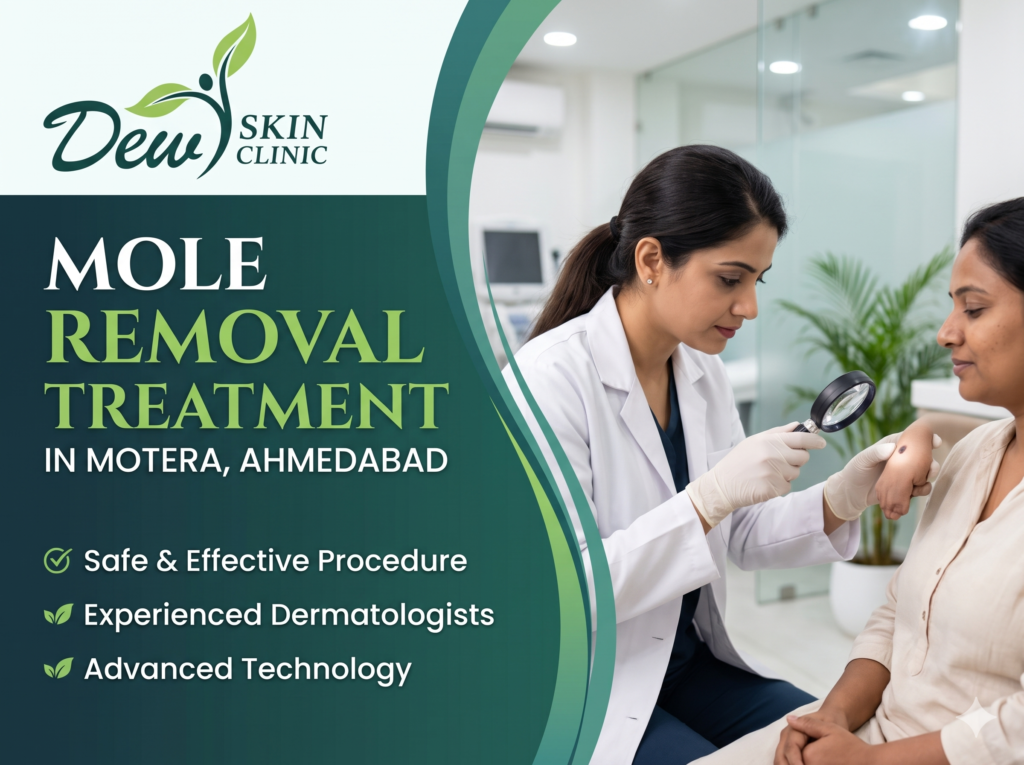
Mole Removal Treatment in Motera, Ahmedabad: A Complete Doctor-Led Guide to Safe, Scar-Minimal Results
Moles are small, but the questions around them are big. Is this one harmless? Will removing it leave a mark? Which method is safest for my face? If you have been searching for mole removal treatment in Motera, Ahmedabad, this guide answers those questions in plain language, so you can decide with confidence before you walk into a clinic.
At Dew Skin Clinic, mole removal is treated as a medical procedure first and a cosmetic one second. Every mole is examined, classified and only then removed with the method that suits its depth, colour and location. Below you will learn how moles form, when they need urgent attention, how laser mole removal, radiofrequency and surgical options differ, what recovery looks like, and what influences cost for mole removal in Motera.
What Are Moles and Why Do They Appear?
A mole (medically, a melanocytic nevus) is a cluster of pigment-producing cells called melanocytes. Instead of spreading evenly through the skin, these cells gather in one spot and form a brown, black, pink or skin-coloured spot. Most people have between ten and forty moles, and new ones commonly appear through childhood, adolescence and early adulthood.
Moles are shaped by genetics and sun exposure. Fair-skinned people, those with a family history of many moles, and anyone who has had repeated sunburns tend to develop more. Hormonal changes such as puberty and pregnancy can also darken or enlarge existing moles.
Common Types of Moles
- Flat moles (junctional): level with the skin and usually brown.
- Raised moles (compound or dermal): dome-shaped, sometimes with hair growing from them.
- Congenital moles: present at birth and often larger, which is why they deserve regular monitoring. If yours is a larger patch present since birth, see our page on birthmark removal treatment.
- Atypical (dysplastic) moles: irregular in shape or colour and in need of closer evaluation.
Not every dark spot is a mole. Warts, skin tags, seborrhoeic keratoses and pigmented patches can look similar, which is why a trained eye matters. Dedicated pages on skin tag removal and warts treatment explain the differences.
When Should You Get a Mole Checked by a Dermatologist?
Most moles are harmless, but a few can signal early skin cancer. Dermatologists use the ABCDE rule as a quick screening guide:
- A – Asymmetry: one half does not match the other.
- B – Border: edges are ragged, notched or blurred.
- C – Colour: several shades of brown, black, red, white or blue in one mole.
- D – Diameter: larger than about 6 mm, roughly a pencil eraser.
- E – Evolving: any change in size, shape, colour or height.
Also book a visit if a mole itches, bleeds, crusts, becomes painful, or looks different from your other moles. Do not wait for a “convenient time” if you notice these changes. Early evaluation makes treatment simpler.
A clinic offering mole removal near me in Motera should begin with an examination, not a procedure. At Dew Skin Clinic, suspicious lesions can be assessed with dermoscopy, a magnified, lit examination of the mole’s internal pattern. If something looks doubtful, a skin biopsy confirms what the lesion truly is. Understanding why regular skin cancer screenings are important is the best first step toward prevention.
Why Choose Doctor-Led Mole Removal in Motera, Ahmedabad?
Motera has grown quickly, with residents, professionals and sports visitors around the Narendra Modi Stadium area all looking for reliable skin care close to home. Nearby areas such as Chandkheda, Sabarmati and Adalaj add to the demand for a trusted dermatologist for mole removal in the north-west of the city.
Still, convenience should never outrank safety. Here is why a dermatologist-led approach matters:
- Correct diagnosis first. Removing a mole that should have been tested can hide important information.
- The right tool for each mole. A flat facial mole and a raised body mole need different techniques.
- Lower scarring risk. Technique, depth control and aftercare decide how the scar heals.
- Sterile, controlled setting. Clinical hygiene reduces infection risk.
- Clear follow-up. You know whom to contact if healing looks different from expected.
Dew Skin Clinic’s approach to trusted dermatology care in Motera rests on these principles.
Mole Removal Methods: Which One Is Right for You?
There is no single best method. The right choice depends on the mole’s depth, colour, size, location and whether tissue testing is needed. Here are the main options a dermatologist considers.
1. Laser Mole Removal (CO2 Laser)
A CO2 laser vaporises the mole tissue layer by layer with precise control. It suits small, raised, clearly benign moles, especially on the face and neck, where fine control helps cosmetic outcomes. Bleeding is minimal and the wound is usually shallow. You can read more about the technology on the CO2 laser service page.
2. Radiofrequency and Electrocautery
Radiofrequency electrocautery uses controlled electrical energy to remove or flatten raised moles, tags and similar growths. It seals tiny blood vessels as it works, so the treated area stays relatively dry.
3. Surgical Excision
For deeper moles, larger moles or any lesion that needs laboratory examination, the doctor cuts out the mole with a small margin of normal skin and closes it with fine sutures. This is the preferred option when pathology is required, because the whole lesion can be sent for testing. See our overview of dermato surgery for what minor skin surgery involves.
4. Shave Excision
The doctor shaves a raised mole level with the surrounding skin using a blade, often followed by gentle cautery. It works well for protruding moles and typically leaves a flat, pale mark that blends over time. The removed tissue can be sent for testing when needed.
5. Cryotherapy (Selected Lesions Only)
Cryotherapy freezes unwanted growths using liquid nitrogen. It works well for warts and some skin tags, but it is generally not chosen for pigmented moles that need diagnosis. Patients who want details on this approach locally can read about cryotherapy treatment in Motera.
Important: Never try home remedies, acid pastes, blades or over-the-counter “mole removal creams”. These can cause burns, infection, permanent scarring and, worse, delay the diagnosis of a dangerous lesion.
The Mole Removal Procedure Step by Step
Knowing what to expect removes most of the anxiety. A typical visit at Dew Skin Clinic follows these steps.
- Consultation and examination. The doctor reviews your history, checks the mole with dermoscopy and explains the safest method.
- Photographs and planning. Before-treatment photos help track healing, and the doctor marks the area.
- Cleaning and numbing. The skin is cleansed and a local anaesthetic is applied or injected, so you feel pressure but little pain.
- Removal. Depending on the plan, the mole is lasered, cauterised, shaved or excised. Most small moles take only a few minutes each.
- Dressing and instructions. A protective dressing is applied and you receive written aftercare advice.
- Pathology, if advised. Tissue sent to the laboratory is reviewed, and results are discussed at follow-up.
Most patients walk out the same day and return to routine activities quickly. People living in Motera, Sabarmati or Chandkheda can easily fit this into a lunch break or a weekend morning.
Recovery and Aftercare: How to Heal With Minimal Scarring
Healing is where results are won. Follow these guidelines carefully:
- Keep the area clean and dry for the first 24 hours, then wash gently as advised.
- Apply only the ointment your doctor recommends.
- Never pick at scabs, since they fall off naturally within about one to two weeks.
- Protect the area from sunlight with a sunscreen of SPF 30 or higher once the wound has closed. Sun exposure can darken fresh skin.
- Avoid swimming, heavy sweating and friction on the area until it heals.
- Expect pinkness for several weeks. Mild redness gradually fades.
Contact your doctor if you notice increasing pain, pus, spreading redness or fever. If you are prone to marks, ask about supportive options such as skin texture and scar treatments, which can improve how a scar looks later.
How to Prepare for Your Mole Removal Appointment in Motera
A little preparation makes the visit smoother and the healing better. Before you come to the clinic:
- Note any changes. Write down when you first noticed the mole and whether it has grown, changed colour, itched or bled.
- Share your medical history. Mention allergies, diabetes, blood thinners, a tendency to form thick scars and any past skin cancer in the family.
- Avoid tanning and sunburn. Freshly tanned skin raises the chance of uneven pigmentation after treatment.
- Skip shaving or harsh products on the area for a day or two so the skin is calm.
- Bring earlier photos or reports, if you have them, so the doctor can judge whether the mole has changed.
- Ask questions. Ask which method will be used, whether tissue testing is advised, how many visits to expect and what the aftercare plan is.
Wear comfortable clothing that allows easy access to the area. For moles on the face, come without makeup if possible. These small steps help your dermatologist work accurately and help you heal with fewer surprises.
Possible Risks, Scarring and Recurrence
Every procedure carries some risk, and honest clinics discuss them upfront. Possible effects include temporary redness, a small flat scar, lighter or darker pigmentation at the site, and, rarely, infection. People with a tendency toward thick scars should mention this, and those with keloid-prone skin should read about keloid treatment before removal.
A mole can occasionally return if some pigment cells were left behind, particularly after shave or laser methods. Any pigmented regrowth should be examined rather than ignored. Choosing an experienced doctor, following aftercare and protecting the area from the sun all lower these risks.
Mole Removal Cost in Motera, Ahmedabad
Patients often ask for a fixed price, but fair pricing depends on several factors:
- Number of moles treated in a session
- Size and depth of each lesion
- Location, since facial moles need finer work
- Method used, whether laser, radiofrequency or surgical excision
- Pathology testing, if the tissue needs laboratory review
- Follow-up visits and scar care
Charges for mole removal in Ahmedabad vary widely between clinics, so a transparent quote after examination is better than a number advertised without seeing your skin. At Dew Skin Clinic, the doctor explains the plan and the estimated cost before you agree to proceed. Be cautious of very low prices that skip proper assessment or sterilisation.
Who Is a Good Candidate for Mole Removal?
You may be a good candidate if the mole is benign on assessment and causes cosmetic distress, catches on clothing or jewellery, bleeds when shaved, or simply bothers you. Medical removal is advised for moles that look suspicious or are changing.
Removal may be postponed or adapted if you have active skin infection near the mole, a history of poor wound healing, certain blood-thinning medicines, or recent heavy sun exposure. The doctor will advise based on your health history. Pregnant women should discuss timing and method with the doctor first.
Other Skin Care Options Near Motera
Many patients combine mole removal with other skin goals once the area has healed. Dew Skin Clinic also offers melasma treatment in Motera, acne scar treatment near Motera, anti-aging skin treatment in Motera, laser facial hair removal in Motera and hair loss treatment in Motera. Your doctor can help you sequence treatments safely so one does not compromise another.
Why Dew Skin Clinic for Mole Removal in Motera, Ahmedabad?
- Examination before any procedure: dermoscopy and, where needed, biopsy
- Multiple techniques under one roof: laser, radiofrequency, shave and surgical excision
- Personalised planning by our dermatology team for each mole, skin type and goal
- Clear aftercare guidance and follow-up access
- Honest expectations, with no exaggerated promises
- Real patient experiences, which you can read on our testimonials page
You can see the full range of our mole removal treatment service for a broader overview, or explore all popular treatments at the clinic.
Frequently Asked Questions About Mole Removal in Motera, Ahmedabad
Is mole removal painful?
A local anaesthetic numbs the area before removal, so most patients feel only mild pressure or a brief pinch. Mild tenderness for a day or two afterwards is common.
How long does mole removal take?
A single small mole usually takes only a few minutes. The full visit, including consultation, numbing and dressing, generally lasts under an hour.
Will mole removal leave a scar?
Some mark is possible with any removal. Careful technique, correct aftercare and sun protection keep it as faint as possible, and many become barely noticeable over months.
Can a mole grow back after removal?
Occasionally. If pigment cells remain, the mole can reappear. Have any regrowth examined by a dermatologist rather than treating it yourself.
Is laser mole removal better than surgery?
Neither is better in every case. Laser suits small, clearly benign raised moles, while surgical excision is preferred for deeper or suspicious lesions that need pathology.
Should every removed mole be tested?
Not always, but any mole that looks atypical or has changed should be sent for laboratory examination. Your doctor will advise after dermoscopy.
When can I return to work or exercise?
Most people resume work the same day or the next. Avoid strenuous exercise, swimming and friction on the area until the doctor confirms it has healed.
More answers are collected on our FAQs page.
Book Your Mole Removal Consultation in Motera, Ahmedabad
A mole that bothers you, or worries you, deserves proper attention. Whether your goal is cosmetic clarity or peace of mind, a careful examination is always the right place to begin. Our doctors will examine the mole, explain every option in simple language and recommend the safest path for your skin.
Ready to take the next step? Book an appointment today or contact Dew Skin Clinic to speak with our team about mole removal treatment in Motera, Ahmedabad.
Disclaimer: This article is for general education and does not replace a personal medical consultation. Results and healing vary from person to person.